
Rule of thumb: if your garage door is sluggish or stuck on a cold morning in Clarcona, the cold is rarely the real problem—it's just exposing something that was already wearing out. Central Florida doesn't get the hard freezes that crack open garage doors up north, so true ice-locked doors are the exception here, not the rule. The exceptions worth knowing: on the handful of nights each winter when temperatures dip into the high 30s or low 40s, overnight condensation on a cold concrete slab can actually freeze the bottom seal to the floor by morning, and homes with wood or wood-composite doors can see swelling from months of humidity suddenly bind up when a cold front dries the air out fast. Both are real, but both are also quick to diagnose once you know what to look for.
Symptoms to Watch For
- The door won't lift at all, or the opener strains and reverses itself partway up.
- You hear a grinding or scraping sound as the door tries to move.
- The bottom edge looks or feels stuck to the slab, sometimes with a thin film of moisture or frost around the seal.
- The door opens a few inches, stalls, and the opener light blinks an error code.
- One side of the door seems to drag or lean while the other moves normally.
None of these symptoms alone tell you the cause—that's why a technician works through them in a specific order, starting with the fastest thing to rule out.
What a Technician Checks First: The Seal and the Slab
On a genuinely cold, damp morning, the first thing to check is whether the rubber bottom seal has frozen to the concrete. This happens when overnight condensation pools under the door and a cold snap drops the slab temperature enough to turn that moisture into a thin layer of ice. It's more of a one- or two-morning-a-year event here, but it does happen, especially in garages that sit low or get extra runoff from afternoon downpours the day before.
The fix: never force the opener against a stuck seal—that's how you strip a drive gear or bend a track. Instead, gently work a flat tool under the seal to break the ice bond, or let the sun warm the door for twenty minutes before trying again. If this keeps happening, grading the slab or adding a threshold seal that sheds water away from the door solves it permanently.
Next: Track Alignment and Rust
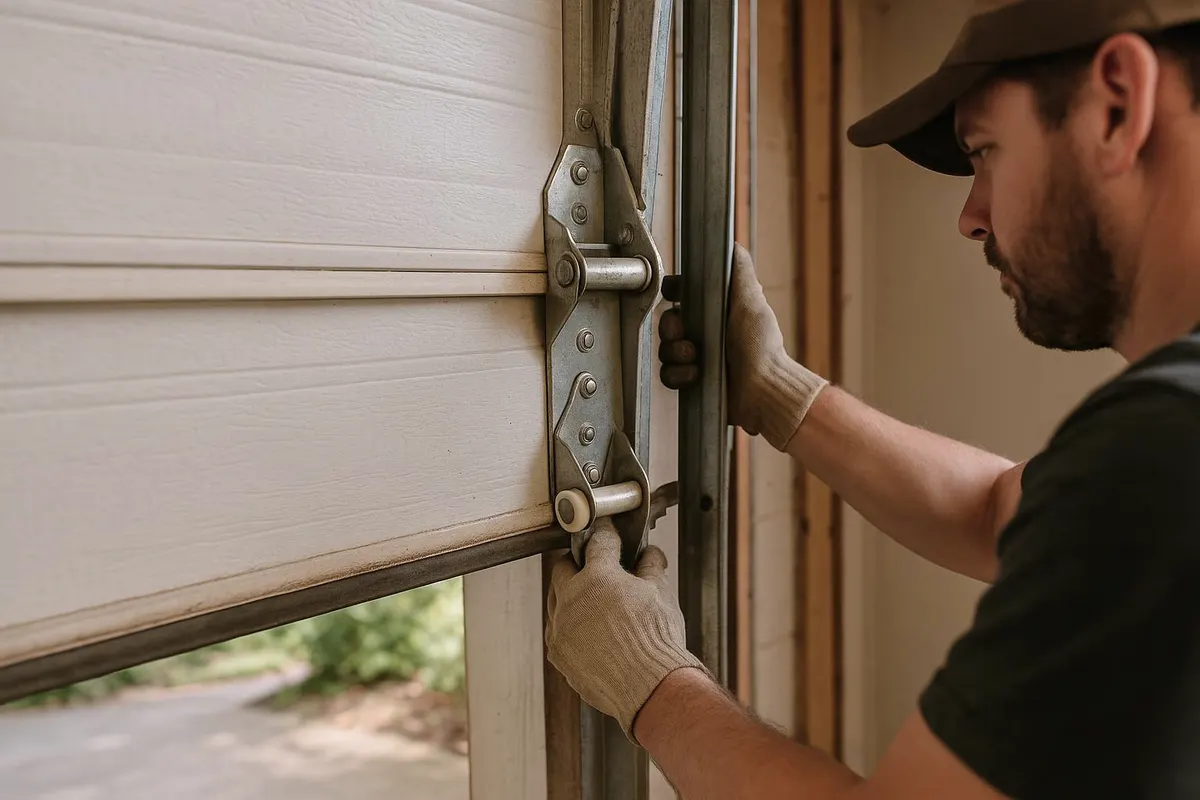
After ruling out ice, the next stop is the tracks and rollers. Clarcona's humidity means condensation forms on steel tracks even when it isn't technically cold outside, and that moisture plus any salt-laden air drifting in from storms can start surface rust in a season or two—especially on older doors that haven't had a tune-up. Rust roughens the track surface just enough that rollers bind instead of gliding, and that binding gets worse the first cool morning when metal contracts slightly.
The fix: a technician checks the tracks for pitting, wipes them down, and re-aligns any section that's drifted out of plumb. Light surface rust can be cleaned and the track lubricated; heavier corrosion usually means replacing that track section rather than fighting it every season.
Then: Spring Tension
Torsion springs don't freeze, but rust and humidity do stiffen the coils over time, and a door that's already carrying a slightly weak or corroded spring will feel noticeably heavier on a cool, damp morning than it does in August heat. If the opener is straining and reversing, this is usually the real culprit rather than the temperature itself.
The fix: this is not a homeowner repair—torsion springs are under enough tension to cause serious injury. A technician checks the wind and tension, inspects for rust pitting or visible gaps in the coils, and replaces the spring set if it's compromised. Most spring failures show warning signs like this well before they snap completely.
Then: Lubrication
Afternoon downpours followed by humid, still air is a cycle that washes lubricant off hinges and rollers, then lets grit and moisture settle into whatever's left behind. The result is a gummy residue that grabs instead of glides, and it's often mistaken for a cold-weather problem simply because people notice it most on the one chilly morning they're in a hurry.
The fix: clean off old residue and reapply a silicone-based garage door lubricant to hinges, rollers, and the torsion spring—never standard household oil, which attracts more dust and breaks down faster in heat and humidity.
Last: Opener Settings and Weatherstripping Swell
If the hardware checks out, the remaining possibilities are an opener's force or limit settings drifting out of adjustment—common after months of heat cycling—or, on wood and composite doors, side weatherstripping that's swollen just enough to drag against the jamb after a humid stretch followed by a dry cold front. Both produce a door that hesitates or stalls without any obvious damage.
The fix: reset the opener's travel limits and force settings per the manufacturer specs, and trim or reseat weatherstripping that's swollen tight against the frame.
When to Call Clarcona Garage Door Pro
If your door is sticking, grinding, or reversing and a quick seal check or lubrication doesn't fix it, it's time to call in a local garage door technician rather than keep forcing the opener. Our Garage Door Tune-Up & Maintenance service covers exactly this sequence—seals, tracks, springs, and opener settings—so small issues get caught before a cool morning turns into a dead spring or a door stuck off its track. If the door's already dragging or hanging unevenly, our Off Track Door Repair and Garage Door Spring Repair teams can get it moving safely the same day.
If your garage door in Clarcona, FL is sluggish, stuck, or straining this season, call Clarcona Garage Door Pro for fast, local service that gets it right the first time.